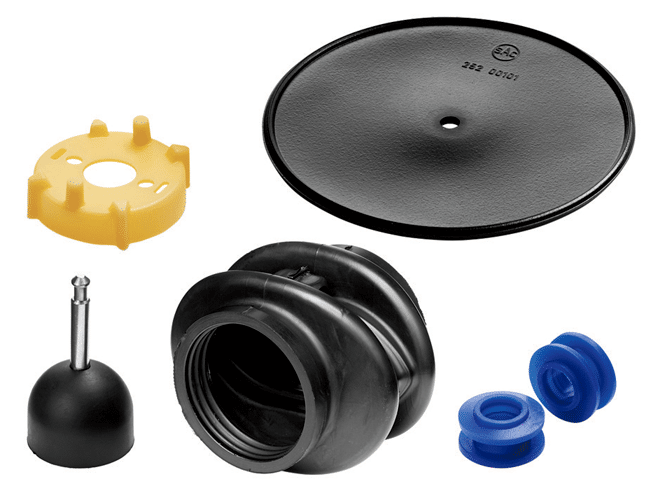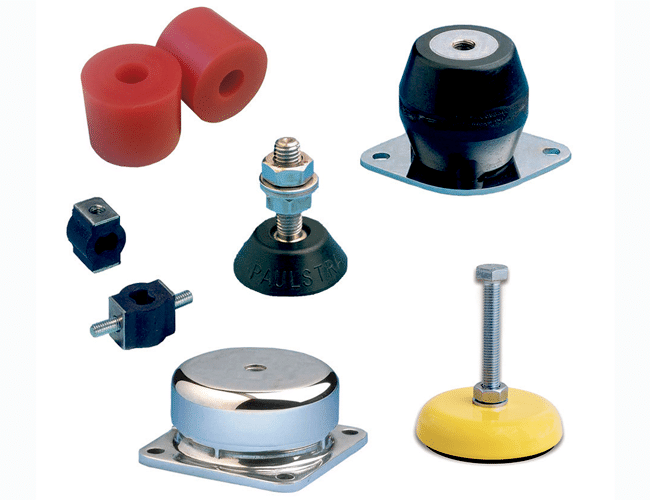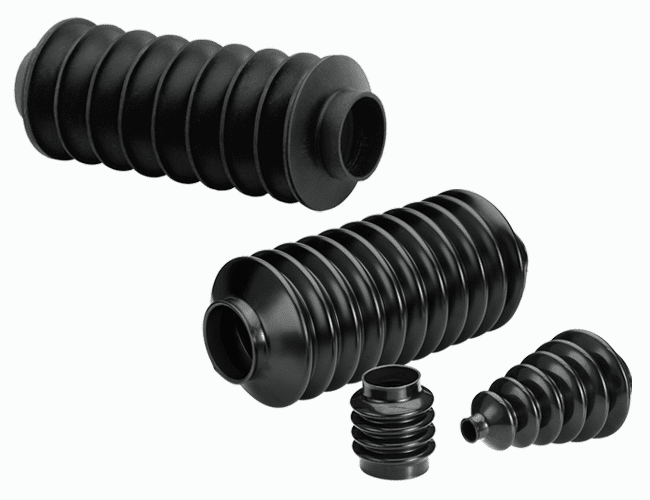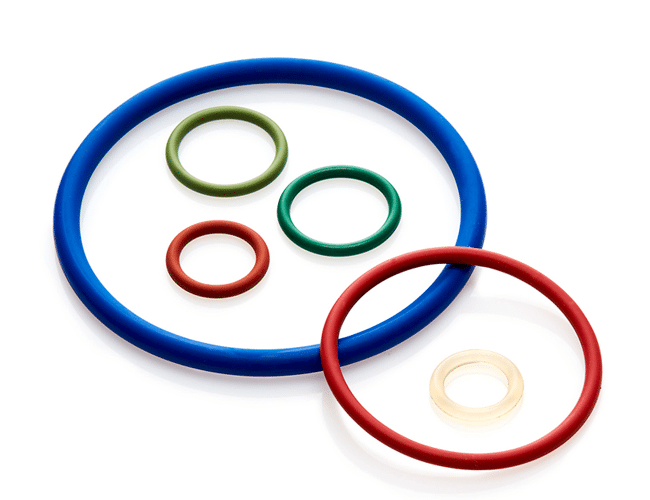




Engineering plastics parts
Engineering plastics is a term for high-performance, durable plastics that can be either inelastic/rigid or soft/flexible and used for technical applications.
Engineering plastics are widely used in the food industry, medical equipment, machine construction, automation and more, thanks to the materials' unique properties, possible FKM approvals and versatile design options.
Plastic components and parts are primarily manufactured through three methods: injection molding, extrusion or mechanical processing. The choice of manufacturing method depends on the product design, function and the specific requirements of the application.
Plastic parts for industry and tech products
Engineering plastics are indispensable in modern industry due to their versatility of use, durability and almost limitless design possibilities.
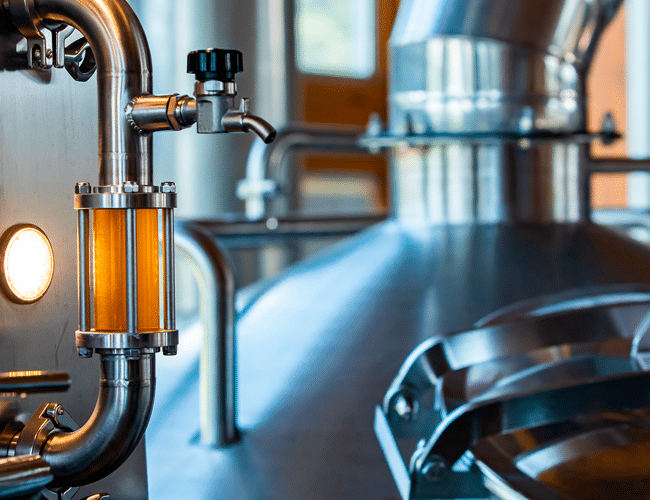
Food industry
Requirements
- Hygiene: Materials must be food grade and easy to clean.
- Corrosion resistance: Need high resistance to corrosive chemicals and detergents.
Typical components
- Conveyor components
- Cutting blades
- Gaskets and seals
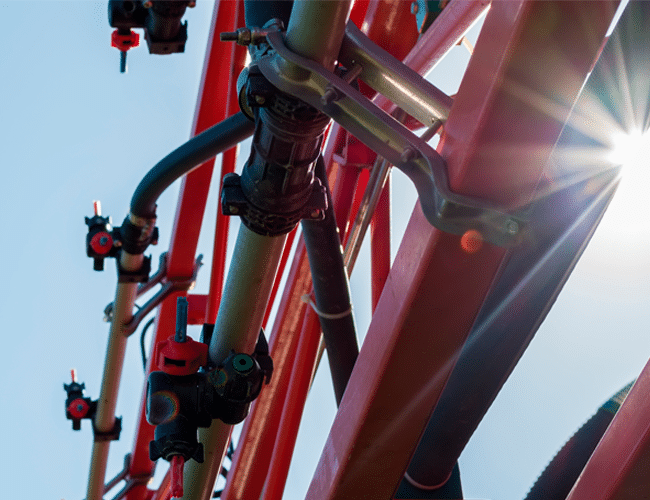
Machine industry
Requirements
- Wear resistance: Ability to withstand constant mechanical stress.
- Low friction: To minimize energy loss and heat generation.
Typical components
- Tenant
- Gear
- Guide rails

Pharmaceutical industry
Requirements
- Biocompatibility: Materials must be safe to use in medical devices and implants.
- Sterilizability: Ability to withstand sterilization processes without losing properties.
Typical components
- Surgical instruments
- Diagnostic equipment
- Implants
- Functional components in devices and equipment
Good overall economy and sparring with experts
By eliminating a sub-process or manual tasks, you reduce your production costs, complexity and potential assembly errors.
Your company gets more benefits by consolidating supply logistics with Betech:
Less transportation and time spent
You avoid having to coordinate between multiple suppliers. This means fewer transports, shorter lead times and simpler logistics.
Unified expertise and holistic advice
Our professionals can advise you on material selection, component design and product development. With our existing insight into your company's policy, products and production conditions, we can provide precise, holistic advice on your opportunities with plastics technology.
Integrated components and bundled delivery
If you need solutions that combine plastic and elastomer parts, it is possible to let Betech handle the manufacturing, any kit assembly and coordinated delivery of the finished components. You get a complete solution where sub-components are optimized to work together, strengthening the functional design and quality of the product.
Production of engineering plastic parts
Betech offers plastic parts manufactured in the way that is most advantageous in terms of shape, application and volume.
- Injection molding (injection molding)
- Extrusion
- Machine processing
Plastic injection molding (injection)
Process
Injection molding involves heating plastic material until it becomes liquid and then injecting it into a mold. As the plastic cools and solidifies, the desired shape is achieved.
Benefits and advantages
- Efficiency in mass productionIdeal for producing large quantities of identical parts with high precision.
- Design freedom: Enables complex geometric shapes that can be difficult to achieve with other methods.
- Material selection: A wide range of plastics can be used, including both thermoplastics and thermosets.
Disadvantages
- High start-up costs: Manufacturing molds can be costly, making the method less economical for small series.
- Limited flexibility after mold making: Design changes require new molds, which can be time-consuming and expensive.
Turning and milling plastics
Process
Machining by CNC milling and turning involves removing material from a plastic block or bar to achieve the desired shape.
In addition to turning, we also manufacture complex, precise plastic parts using our powerful CNC flatbed cutting machine and agile milling robot.
Benefits and advantages
FlexibilitySuitable for prototypes and small series where design changes can be implemented quickly without the need for new molds.
High precision: Enables the production of parts with tight tolerances and smooth surfaces.
Material utilization: Less material waste compared to some other manufacturing methods.
Disadvantages
Longer production time: Can be time consuming for complex parts compared to injection molding.
Limited suitability for mass production: Less economically advantageous for large production volumes.
Extrusion of plastics
Process
In extrusion, plastic granules or powder are fed into an extruder through a hopper. Inside the extruder, the material is heated until it melts and a rotating screw forces the molten plastic through a nozzle or die, which determines the final cross-sectional profile of the product. After forming, the extruded part is cooled, typically by air or water, and cut to the desired lengths.
With extruded pipes and profiles, companies can achieve efficient and cost-saving solutions with consistent quality standards.
Benefits and advantages
Continuous productionExtrusion is suitable for mass production of products with a uniform cross-section, such as pipes, profiles and sheets.
Effectiveness: The process allows high production speed and minimal material waste.
Flexibility in design: By changing the shape of the nozzle (die), you can produce a wide range of profiles and geometric shapes.
Disadvantages
Limitations in complexityExtrusion is less suitable for producing complex three-dimensional shapes that require detailed geometric precision.
Material limitationsNot all plastics are equally suited to the extrusion process, which can limit the choice of material.
Cutting and engraving
Process
Many plastics are available in prefabricated sheets that are efficiently processed with flatbed cutting machines to the desired design.
Benefits and advantages
Flexibility: At Betech, we have CNC cutting machines that are quickly ready to execute the cutting program for your product. The machine in this video is equipped with a particularly powerful cutting head that enables processing of harder, thicker and stronger materials such as many types of plastic. In addition to cutting, the machine can perform engraving and milling in the sheet material.
High precision: The cutting machines enable workpieces with tight tolerances.
Disadvantages
Limited suitability for very large production runs: Less economically advantageous for large production volumes.
Common types of plastics, their properties and typical applications
The choice of plastic material depends on the specific requirements of the application.
This list provides an overview of the most commonly used plastics in technical applications and how their characteristic properties make them suitable for different purposes.
POM
Polyoxymethylene
Features and properties
- High strength and stiffness
- Low coefficient of friction
- Good dimensional stability
How to use
- Precision components like gears and bearings
- Electrical insulators
- Valve parts
ABS
Acrylonitrile Butadiene Styrene
Features and properties:
- High impact strength
- Good chemical resistance
- Easy to machine
How to use:
- Electronics Houses
- Car interior and exterior parts
- Toys and consumer products
HDPE
Polyethylene
Features and properties:
- High impact strength
- Excellent chemical resistance
- Low water absorption
How to use:
- Pipes and fittings
- Containers for chemicals
- Cutting pads
PP
Polypropylene
Features and properties:
- Low density and lightweight
- High chemical resistance
- Good flexibility and impact strength
How to use:
- Packaging and containers
- Pipe and fitting systems
- Medical products
PA
Polyamide (nylon)
Features and properties:
- High wear resistance
- Good chemical resistance
- Self-lubricating properties
How to use:
- Bearings and bushings
- Gear
- Cable ties
PTFE
Polytetrafluoroethylene
Features and properties:
- Extremely low friction
- High temperature resistance
- Excellent chemical resistance
How to use:
- Seals and gaskets
- Non-stick coatings
- Electrical insulators
PEEK
Polyetheretherketone
Features and properties:
- High mechanical strength
- Resistant to high temperatures
- Excellent chemical resistance
How to use:
- Components in the oil and gas industry
- Medical implants
- Electronic parts
We are ready to advise you
The products on these pages are examples from our almost limitless universe of possible solutions.
Do you need technical plastic parts for your machine, product or plant?
Didn't find what you were looking for? We're ready to help you find the right solution.